Co-Op
Compliance
Checker

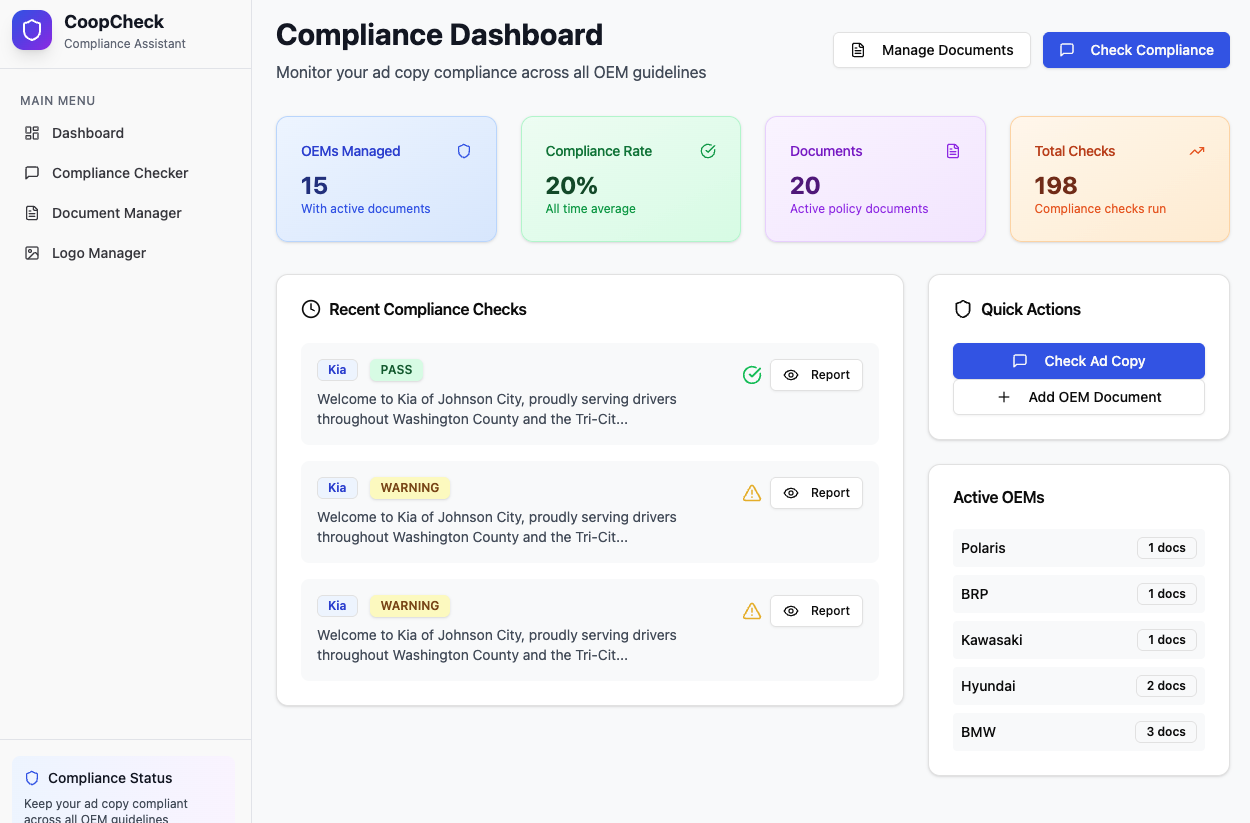
I built an AI-assisted compliance platform that analyzed draft creative against OEM brand guidelines and historical rejection patterns, giving production teams an instant confidence score before submission.

The platform centralized compliance documents, logo assets, AI-assisted review workflows, and approval operations into one system teams could use every day.

Co-Op Compliance Checker Dashboard
AI-assisted review engine 15% → 95% approval rate
CURRENTLY VALIDATING
> CHECK • REVIEW • APPROVE • ORGANIZE _

Overview

01 / Context

Compliance was slowing production

Production teams were spending too much time going back and forth with OEMs after creative was submitted. Teams often did not know whether copy, logos, or disclaimers were compliant until feedback came back.

I identified the opportunity to create a centralized workflow that could give teams faster answers, improve organization, and reduce avoidable revisions.

At a glance

AI-assisted OEM compliance prediction
Centralized guideline document management
Logo asset organization and storage
Confidence scoring trained on OEM feedback

Problem

02 / What was broken

Teams lacked fast compliance visibility

Production teams had to manually search through OEM documents, verify branding rules, and manage logo assets across disconnected systems. That process slowed approvals and created unnecessary rework.

The biggest issue was timing. Most compliance problems were only discovered after submission, leading to revisions, delays, and repeated communication with OEM partners.

The friction

Guidelines spread across multiple documents
Logo assets difficult to manage
Too much manual review work
No visibility into likely approval outcomes

What Was Built

03 / The platform

AI-assisted compliance workflow

I built a compliance workflow platform that used AI-assisted review logic trained on historical OEM rejections and brand guideline documentation to evaluate draft creative before submission.

Instead of waiting for OEM feedback, production teams could receive an instant confidence score showing how likely creative was to be approved or rejected, along with visibility into potential compliance concerns. The system also centralized compliance documents, logo assets, and operational review workflows into a single internal platform.

Core workflows

AI-assisted compliance analysis
Historical rejection pattern analysis
Confidence-based approval scoring
Centralized compliance operations

How It Worked

Select the OEM

Step 1

Production teams selected the manufacturer they were building creative for and accessed the relevant compliance rules and documents.

AI analyzes the draft

Step 2

The system evaluated creative against OEM brand guidelines and historical rejection patterns to identify likely compliance concerns before submission.

Review supporting assets

Step 3

Teams could quickly access approved logos, disclaimers, and compliance documents from a centralized operational library.

Receive a confidence score

Step 4

The platform generated an approval confidence score indicating how likely the creative was to be approved or rejected, helping teams resolve issues earlier in the process.

Impact

04 / Results

The approval workflow changed completely

The platform dramatically improved first-pass approval performance by giving teams earlier visibility into compliance issues and easier access to the right documentation.

Instead of waiting for OEM feedback to discover problems, production teams could catch issues before submission and move through the workflow with much more confidence.

The best workflow improvements are the ones that remove friction before people even notice it.

operating principle behind the platform
15% Previous first-pass approval rate
95% First-pass OEM approval rate after rollout
Earlier Compliance issue detection
Reduced OEM revision loops
Built internally to reduce approval friction and improve operational clarity.

Why this matters

This project reflects how I approach operational AI systems: identify repetitive decision bottlenecks, build workflows around the people using them, and create tools that help teams move faster with more confidence.

Skills demonstrated

Workflow design
Operational tooling
Internal product development
Cross-team process improvement

Back to the index