Dynamic
Inventory
Creative

My role: Product lead, media strategist, and hands-on builder. I identified a structural campaign problem, designed the solution, proved it through a pilot, and turned it into a repeatable offering.

The outcome: A feed-powered creative system, internal customization app, production workflow, and sales enablement package rolled out across several dozen automotive clients.

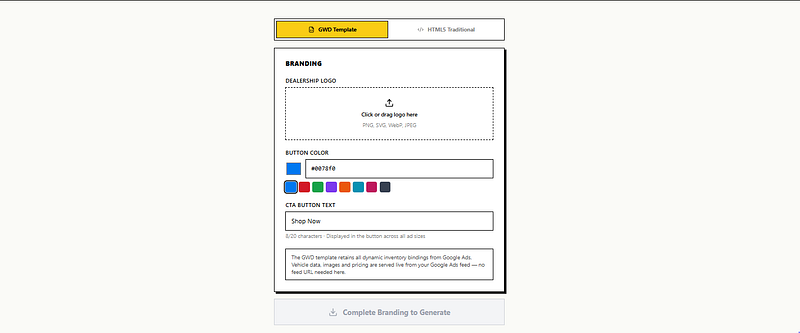
Self-service app for branding and exporting dynamic advertising packages
SELF-SERVICE CUSTOMIZATION APP
PROJECT SIGNAL
>DISCOVER • DESIGN • BUILD • PILOT • ENABLE • SCALE_

Role & Scope

01 / OWNERSHIP

From campaign diagnosis to product rollout

I owned the work end to end: auditing the customer experience, separating a structural format problem from a tactical optimization issue, defining requirements, building the first template, and validating the pilot.

I then converted the prototype into a workflow other teams could use—balancing media performance, data integration, engineering capacity, production reliability, and sales readiness.
THE BUSINESS CHALLENGE

Automotive campaigns were active, targeted, and connected to live inventory, but the responsive format could still serve impressions without prominently showing a vehicle. The campaigns met technical requirements while failing the customer experience—and more routine optimization could not fix the format itself.

“I reframed the issue from a creative defect into a product opportunity: preserve dynamic scale while taking back control of what the shopper sees.”

PRODUCT DECISION

My Approach

01 / DIAGNOSE

Identified the root cause

I audited the final ads—not just campaign settings—and established that the problem was structural. Responsive assembly could deprioritize the product, so adjusting bids, audiences, or asset mixes would never guarantee the intended experience.

02 / DESIGN

Worked within real constraints

I designed the solution around the inventory data our development team already maintained. That avoided a new data model, reduced dependency on limited engineering capacity, preserved real-time pricing and availability, and made a fast pilot possible.

03 / BUILD

Created the dynamic template

I built templates in Google Web Designer that kept vehicle imagery and details central across an expanded set of ad sizes. Live inventory connections kept the ads accurate while giving the team control over the final customer experience.

04 / PRODUCTIZE

Turned a prototype into a usable tool

I limited customization to the elements each dealership actually needed—logo, brand color, call-to-action, and inventory mix—so the output stayed reliable. I then built a simple web app that generated correctly branded, upload-ready packages.

05 / ENABLE

Made adoption part of the product

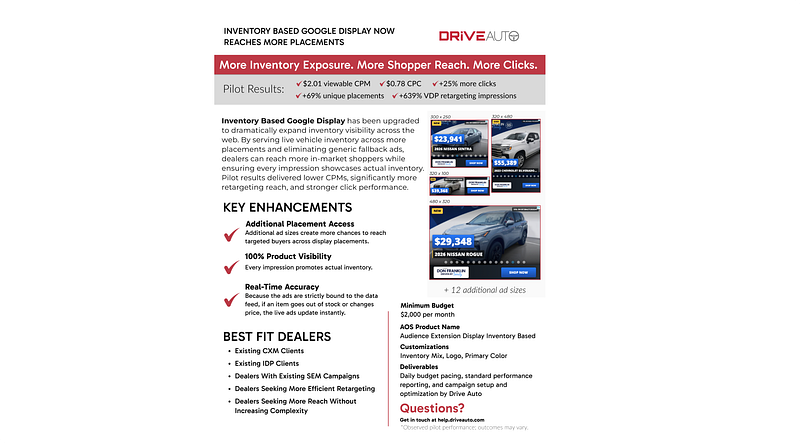
I documented the production workflow and created a client-facing one-sheet for sales. Instead of leading with technical file structures and data connections, the story focused on inventory exposure, placement access, real-time accuracy, stronger retargeting, and operational simplicity.

Branding form for generating customized dynamic creative packages
FROM FOUR BRAND INPUTS TO AN UPLOAD-READY PACKAGE
Sales enablement material created for the dynamic inventory creative rollout
SALES ENABLEMENT CREATED FOR THE MULTI-CLIENT ROLLOUT

Impact

MEASURED PILOT RESULTS

The pilot validated both the media strategy and the product

The new system expanded available inventory, improved engagement, and kept actual vehicles at the center of every impression. The combination of stronger creative control, 12 additional sizes, live data, and standardized production produced measurable gains and justified a broader rollout.

$2.01Viewable media cost per 1,000
$0.78Cost per click
+25%More clicks
+69%Unique placements
+639%Vehicle-page retargeting impressions
+12Additional ad sizes

From pilot to repeatable offering

After the pilot proved the approach, I standardized the editable inputs, documented the production workflow, and created the sales materials needed to expand the system across several dozen dealership clients.

“Scale came from choosing the right constraints—not from adding more options.”

PRODUCT PRINCIPLE

The kind of work I do

I operate where product, marketing, data, and workflow design meet: finding the real bottleneck, aligning people around a practical solution, building enough to prove it, and creating the systems that let it scale.